Overstocking: Understand, Prevent, and Control a Costly Challenge for Small Businesses
November 14, 2025

November 14, 2025

Your shelves are packed with products that aren’t moving, and it’s starting to show in your cash flow? You may be dealing with overstocking, a far more common issue than you might think. Many small businesses struggle with this problem due to overly cautious purchasing or a lack of visibility into their sales.
Keeping inventory on hand is reassuring. But too much inventory ties up capital and reduces profitability. Finding the right balance is essential to maintaining your company’s financial health and operational performance.
In this article, we explain what overstocking is, how it affects your business and, most importantly, how to prevent it for the long term.
Overstocking, also called excess inventory, happens when a business holds more products than it needs or can realistically sell.
Every item sitting on your shelves ties up cash, takes up space, and comes with the risk of damage or obsolescence.
Several factors can lead to excess inventory:
In small businesses, these factors often add up. Without proper visibility or simply out of fear of stockouts, teams tend to order “a bit extra”, and stock quickly piles up without selling.
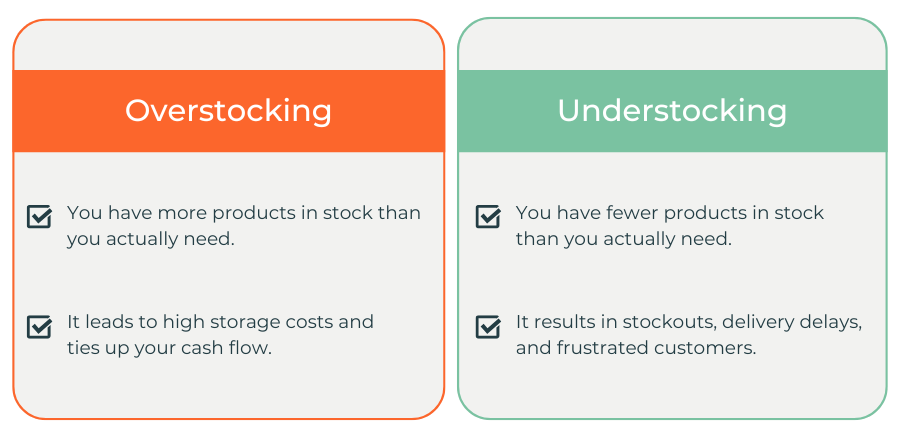
Overstocking and understocking stem from the same problem: poor inventory level management.
Overstocking leads to clutter, higher storage costs, and frozen cash flow.
Understocking, on the other hand, causes stockouts, delivery delays, frustrated customers, and lost revenue.
For small businesses, the goal is to find the right balance. This requires an understanding of market dynamics, a clear analysis of past sales, and above all, real-time visibility into inventory levels.
The key metric to monitor is inventory turnover: the slower it is, the higher the risk of overstocking. The goal isn’t to have more stock, but to have the right stock at the right time.
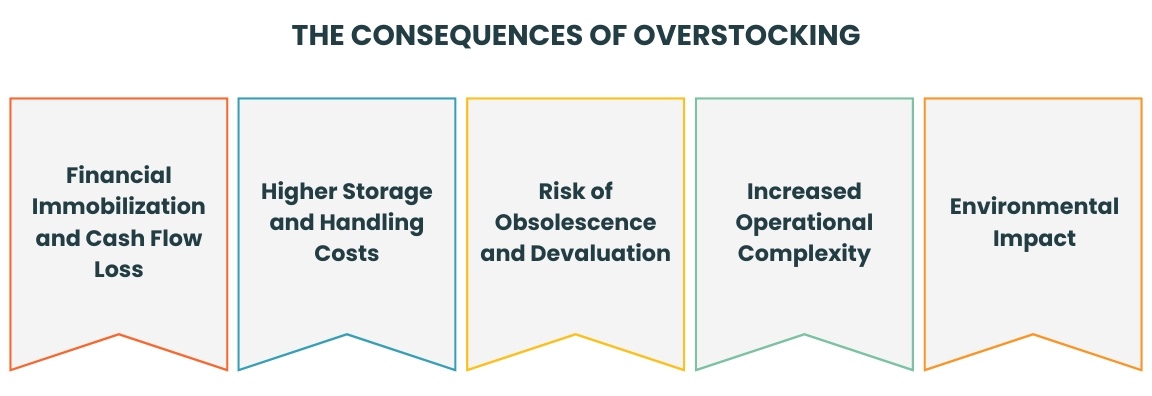
Overstocking impacts far more than just storage space. It affects cash flow, operating costs, logistics, and even your overall business strategy.
Every product purchased in excessive quantities locks away money that could be invested elsewhere: upgrading equipment, funding new purchases, or launching a new product line. In the long run, this frozen capital can slow growth and put your cash flow at risk.
More stock means more space to rent, more energy to consume, and more time spent handling goods. Logistical costs add up quickly: handling, warehousing, insurance… hidden but very real expenses.
Some products lose value quickly: technology items, seasonal products, or perishables. When inventory sits too long, it becomes damaged, obsolete, or simply unsellable.
An overloaded warehouse complicates daily operations. Items become harder to locate, inventory errors multiply, and traceability suffers. This increases the risk of duplicate purchases and losses.
Overstock also leads to waste. Unsold items often end up destroyed, generating avoidable waste and unnecessary carbon emissions. For businesses looking to adopt sustainable practices, this is a key issue.
Overstocking is often a sign of internal inefficiencies or a supply-chain strategy that needs a refresh.
With the right habits and the right tools, it’s entirely possible to reduce and prevent excess inventory. Here are some concrete ways to keep your stock under control.
Start by analyzing past sales and market trends. By identifying high and low demand periods, you can adjust your purchasing strategy accordingly. Reliable historical data is your best asset for anticipating real needs.
Encourage early seasonal pre-orders and ensure sales orders are entered into your system as soon as possible to refine your forecasts.
Overstocking often appears when teams fail to communicate. Purchasing too much without knowing sales are slowing down. Coordinating departments is essential to making decisions aligned with actual demand.
Regular discussions with your sales team are particularly valuable, they have direct insight into customer trends, upcoming opportunities, and products that sell well (or poorly). Encourage early pre-orders and fast entry of sales orders into the system.
Define reorder points to know exactly when to replenish—neither too early nor too late. With Stockpit, you can set low-stock alerts to automate your purchasing decisions.
Manual spreadsheets quickly become inaccurate. With a dedicated inventory management tool, you can instantly visualize stock levels and upcoming product movements. Stockpit’s real-time tracking helps you adjust replenishments based on what’s happening on the ground.
Optimized inventory levels depend on a clear understanding of product turnover. By tracking how quickly items sell, you can identify slow movers that contribute to overstocking.
This analysis also helps you streamline your product catalog. Keep high-value, fast-moving items and gradually remove low-turnover references. The ABC method is a great tool to categorize products based on their strategic importance and revenue impact.
Several strategies can help you sell unsold products:
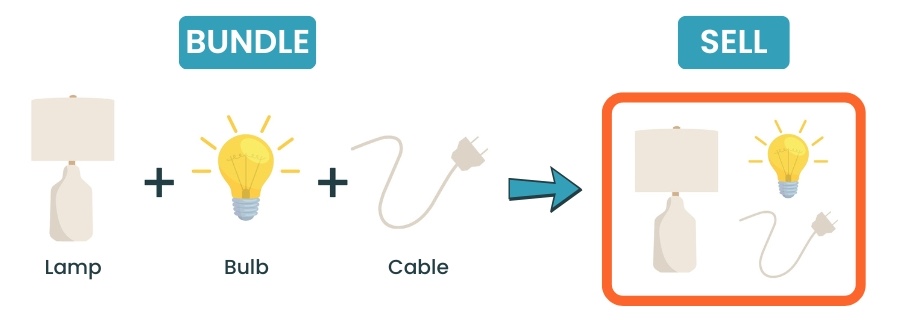
Bundle products: Combine fast-moving and slow-moving items into kits, creating perceived value while freeing up storage space.
Promotions: Offer discounts on specific products, during targeted periods, or for bulk purchases to reduce losses.
Overstocking isn’t just a logistical issue, it’s a real threat to profitability and growth. For small businesses, the goal isn’t to hold less inventory, but to maintain optimized, controlled stock levels.
Effective inventory management relies on forecasting, visibility, and automation—and this is exactly what Stockpitdelivers.
Our simple, connected inventory management software gives you real-time visibility, automates stock alerts, and centralizes all your inventory data. This helps you reduce overstocking risks, improve cash flow, and operate with greater peace of mind.
Because good inventory isn’t the stock that sleeps in your warehouse—it’s the stock that moves efficiently at the pace of your business.
Say goodbye to stockouts! Get your inventory valuation, monitor the inflow and outflow of products and keep track of your inventory.


