Types of Inventory in B2B (and How to Master Them)
October 23, 2025

October 23, 2025
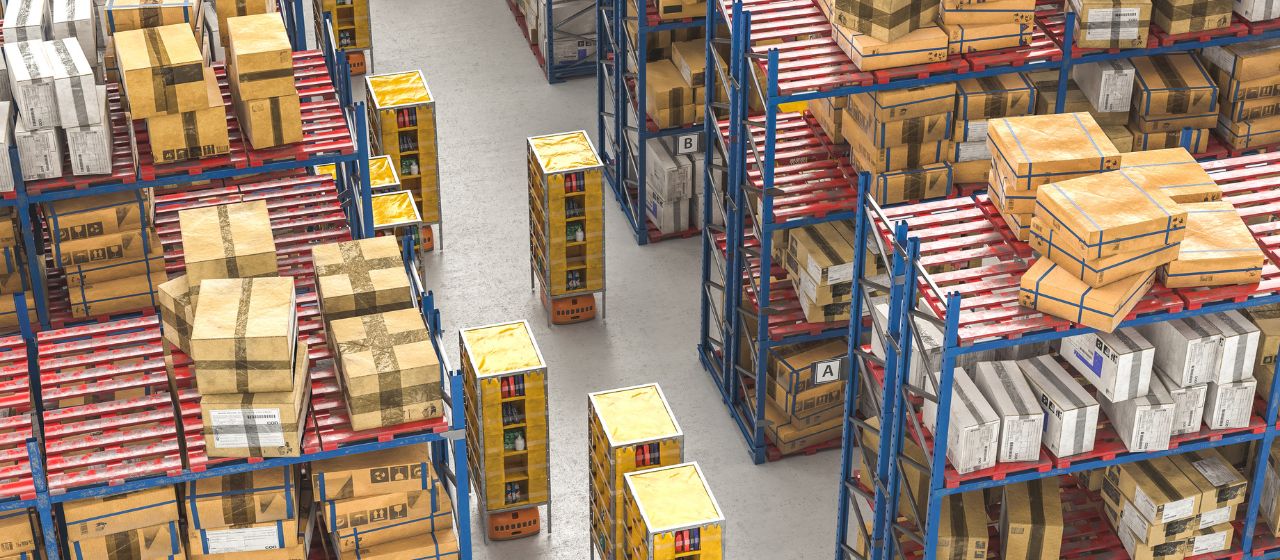
In B2B, inventory management isn’t just an operational task—it’s a strategic advantage. The real challenge lies in finding the sweet spot between product availability, cash flow health, and customer satisfaction.
There are many inventory types, and every company handles them differently depending on its business model and goals.
Understanding the different types of inventory helps you tailor your strategy, reduce costs, and improve responsiveness.
In this article, you’ll find the main inventory categories—grouped into four families commonly used by supply chain practitioners—and how to manage each one effectively.
Most companies manage several inventory categories at the same time, each with a specific role.
Safety stock is your buffer for the unexpected: delivery delays, sudden demand spikes, or a supplier disruption. It acts like a shock absorber to prevent stockouts. Too little and you disrupt production; too much and you tie up precious cash. Striking the right balance is essential.
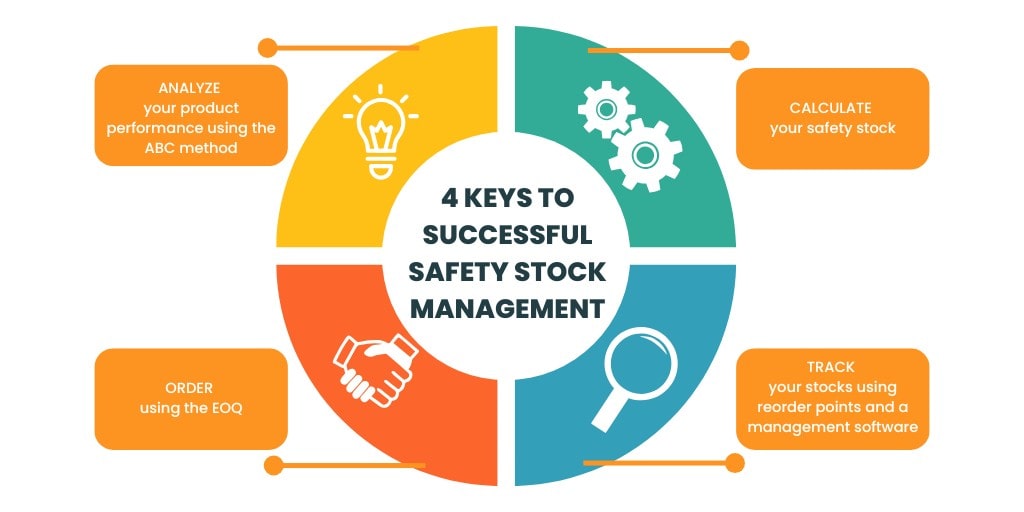
Closely related, the reorder point (ROP) is the threshold that triggers a new purchase order. It depends on supplier lead time and your consumption rate. Getting this threshold right—often automated with inventory software—secures supply without overloading your warehouse.
Companies also define minimum and maximum stock levels. The minimum stock protects service levels and shipping speed, while the maximum keeps overstock and carrying costs in check. Managing both gives you tighter control over on-hand quantities.
Add to this the incoming stock—items you’ve purchased but haven’t yet received. Often overlooked, incoming stock directly impacts your global inventory visibility, especially when you run multiple warehouses.
Incoming stock belongs to a broader set of stock levels used in operations. Alongside it, on-hand is what you physically have in your storage locations; available is your on-hand minus reserved (items already sold or assigned to orders but still on the shelf).
Finally, watch your dead stock—items that no longer sell or are no longer used. They lock up capital and space. Identifying them early lets you liquidate, repurpose, or retire them from circulation.
Business goals, seasonality, and market fluctuations all influence your inventory strategy.
Anticipation (pre-build) stock helps you ride out demand surges or upstream shortages. Built ahead of time, it keeps production and sales flowing—e.g., ramping up inventory before the holiday season.
Speculative stock follows an economic logic: you increase holdings when you expect purchase prices or lead times to rise. This requires sharp market insight and solid cash reserves.
Seasonal stock is tied to your sales cycle. In many industries—food & beverage, medical, fashion—demand swings with the calendar. Mining historical data helps you right-size inventory and avoid overstock.
Recovery stock matters more than ever: returns, repairs, and refurbished items. Too often underestimated, this pool can cut costs and supports your reverse logistics and broader sustainability initiatives.
Lastly, consigned inventory applies when you delegate part or all of your inventory management to a supplier or logistics partner. Until sold, the goods remain the supplier’s property, reducing your carrying costs while safeguarding supply.
Not all products age the same, and shelf life shapes your stocking strategy.
Perishable inventory (food, pharmaceuticals, cosmetics, etc.) needs tight control. Limited shelf life calls for fast rotation and appropriate methods like FIFO (First In, First Out). For these products, traceability is critical to track batches, monitor expirations, and stay compliant across the chain.
When items are in high demand and sell in large volumes, you’re dealing with fast-moving inventory. Frequent replenishment keeps revenue flowing. These products need close monitoring to prevent stockouts—ABC analysis is especially useful to flag your top movers.
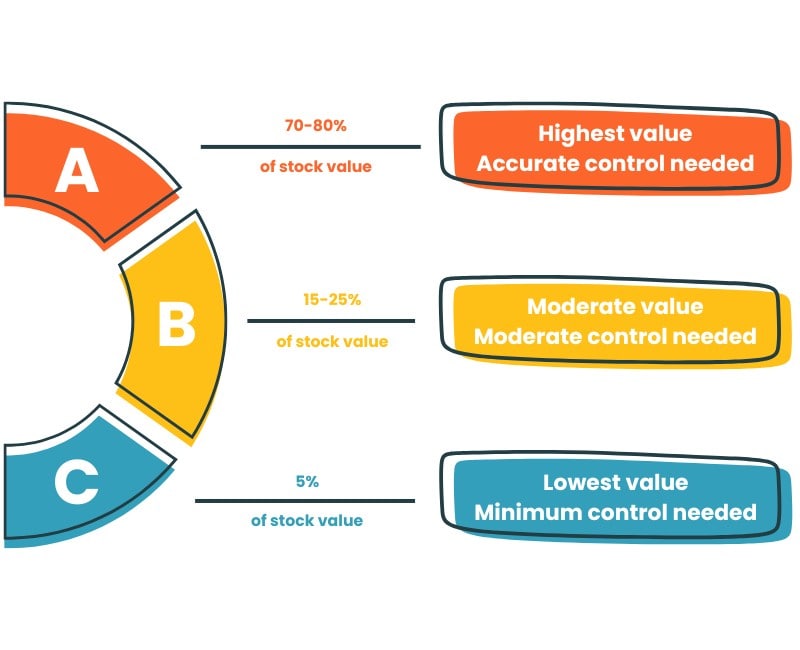
On the flip side, slow-moving inventory covers less popular items. They consume space and cash. Spotting them early helps you adjust ordering and plan purchasing cycles better. Here again, ABC analysis is a proven approach.
Finally, obsolete inventory refers to items at the end of their commercial life—expired, outdated, or replaced by new lines. Without quick action, they can turn into losses. Clear visibility into product life cycles helps limit write-offs and improve overall rotation.
How you run inventory directly impacts profitability and responsiveness.
Fixed-threshold management is the most common approach. You set minimum/maximum levels for each SKU, and when stock hits the reorder point, you trigger replenishment. Simple and often automated, it delivers operational stability.
Just-in-Time (JIT) aims to minimize inventory by receiving goods only when needed. It cuts storage costs and improves cash flow, but demands excellent supplier coordination.
More and more companies are adopting connected, software-driven management. Specialized tools centralize data, notify you automatically at reorder points, and give real-time visibility across your entire inventory. That makes it easier to anticipate needs and secure supply.
Lastly, multi-warehouse management is essential if you operate multiple sites or channels. It helps you position products closer to local demand, reduce transport costs, and speed up deliveries.

Knowing your inventory types lays the groundwork for effective management: anticipate demand swings, avoid stockouts, and limit cash tied up in stock. But without the right tools, the job gets complex fast—especially for small and mid-sized businesses.
That’s where Stockpit stands out.
Our intuitive inventory management software gives you real-time visibility into inventory levels and movements, automating reorder points and replenishment. See your stock by warehouse, run stock valuation, flag slow movers or perishables, and manage your entire inventory from one place.
Stockpit helps SMBs save time, reduce errors, and improve profitability. Whether you’re in B2B commerce, distribution, or manufacturing, having a clear, up-to-date view of your stock is a strategic edge for running your business.
Say goodbye to stockouts! Get your inventory valuation, monitor the inflow and outflow of products and keep track of your inventory.


