Just-in-Time Inventory Management: A Demand-Driven Approach to Stock Control
January 6, 2026

January 6, 2026
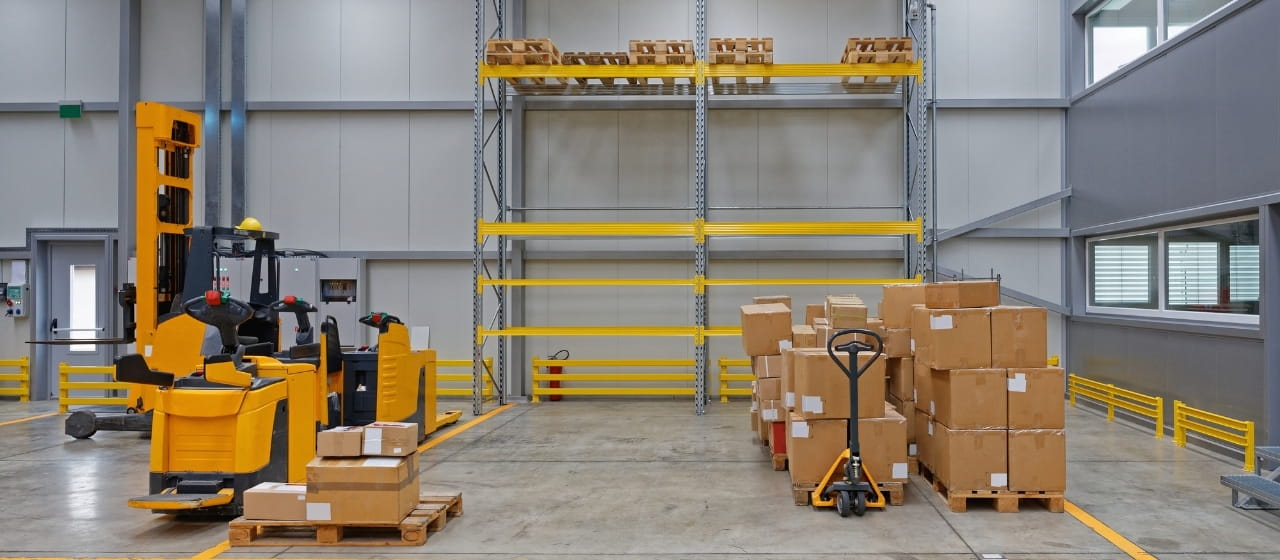
Inventory management can quickly become a daily challenge for B2B small and mid-sized businesses. Holding too much stock increases storage costs and ties up cash flow, while insufficient stock leads to shortages, delivery delays, and customer dissatisfaction. The challenge lies in finding the right balance and avoiding both overstocking and stockouts.
To address these issues, more and more companies are turning to Just-in-Time (JIT) inventory management. Long associated with manufacturing, this approach is now widely adopted in B2B distribution and wholesale. But what does Just-in-Time really involve? How does it work, and is it suited to the realities of SMBs?
Just-in-Time (JIT) is an inventory management method that consists of purchasing, replenishing, or producing goods only when there is a real need. The objective is to minimize unnecessary inventory while ensuring products are available at the right time.
In a Just-in-Time organization, inventory flows are closely aligned with actual demand. Goods move continuously through the supply chain: they are received, prepared, and shipped with minimal time spent in storage. The warehouse is no longer a place to accumulate stock, but a streamlined transit point.
Contrary to a common misconception, JIT does not mean operating with zero inventory. It is primarily about precise synchronization between sales, purchasing, inventory, and logistics, reducing excess without putting operations at risk.
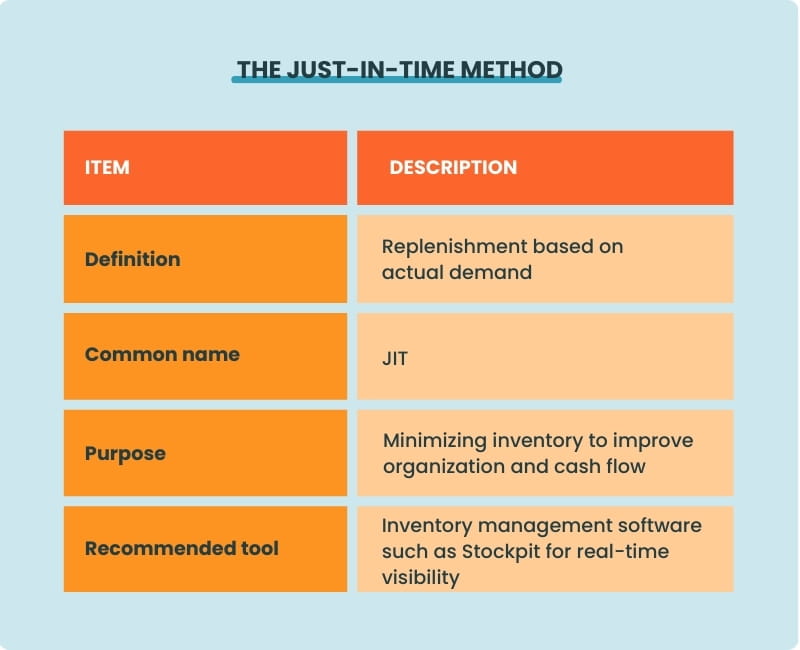
The Just-in-Time method is based on a simple principle: real demand triggers inventory movements. Replenishment decisions are no longer driven solely by forecasts or bulk purchasing strategies, but by customer orders, stock withdrawals, and refined demand signals.
This approach leads to lower inventory levels and places strong emphasis on supplier reliability. Lead times, data accuracy, and operational responsiveness become critical success factors.
JIT is therefore not just a purchasing strategy. It is a global inventory management approach that impacts the entire flow of goods, from procurement to shipping, including warehouse operations.
A push system is an inventory approach in which products are purchased or manufactured based on sales forecasts and held in inventory until they are sold. While this model can provide a sense of security and high service levels, it exposes SMBs to overstocking risks and significant cash immobilization.
In contrast, a pull inventory system, commonly used in Just-in-Time strategies, relies on actual demand to trigger replenishment. This approach improves inventory turnover, limits excess stock, and has a positive impact on cash flow. However, it requires greater visibility, reliable data, and tighter operational discipline.
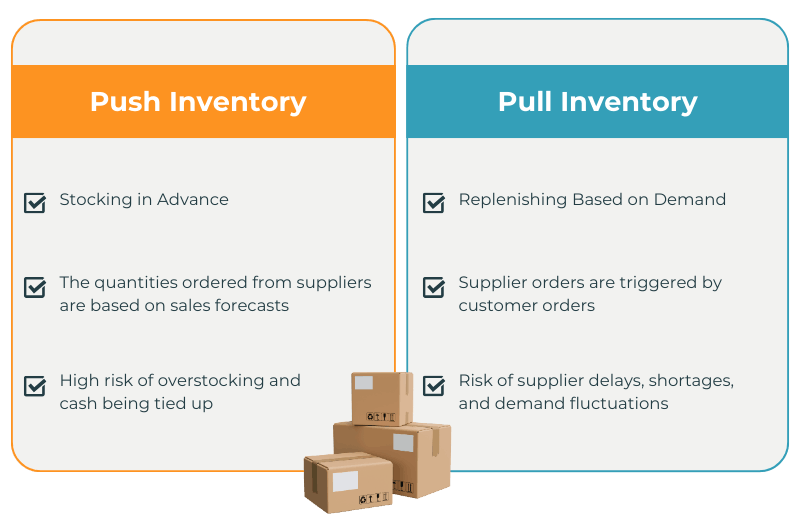
In practice, many companies adopt a hybrid approach. The goal is not to oppose push and pull models, but to adapt them based on product characteristics, customer behavior, and operational constraints.
Tip:
Supplier flexibility and purchasing conditions also play a major role in determining the right balance.
One of the main advantages of JIT is financial. By reducing inventory levels, businesses limit cash tied up in stock. Capital is no longer immobilized in the warehouse and can be allocated to other strategic needs.
Less inventory means less storage space, reduced handling, and smoother warehouse operations. Inventory turnover improves, lowering the risks of obsolescence, damage, and product devaluation.
A demand-driven inventory approach allows companies to adapt more quickly to market changes. Businesses avoid being stuck with slow-moving products and gain flexibility to adjust their offering as customer needs evolve.
Despite its benefits, Just-in-Time inventory management is not without risks. Reduced buffers make businesses more sensitive to disruptions such as supplier delays, shortages, sudden demand fluctuations, or logistical incidents.
For SMBs, poorly implemented JIT can lead to frequent stockouts, service issues, and declining customer satisfaction. This is why a progressive approach, adapted to operational realities and supported by safeguards, is essential.
The success of a Just-in-Time logistics strategy largely depends on warehouse organization. When operating with tight, demand-driven flows, every movement matters. Receiving, picking, and shipping times must be controlled to maintain continuity.
Well-structured logistics reduce unnecessary handling, improve product traceability, and streamline inbound and outbound flows. The warehouse becomes an optimized transit hub rather than a storage-heavy facility.
JIT relies heavily on supplier reliability. Partners must be able to meet consistent and predictable lead times. Overdependence on an unreliable supplier can quickly disrupt operations and cause stockouts.
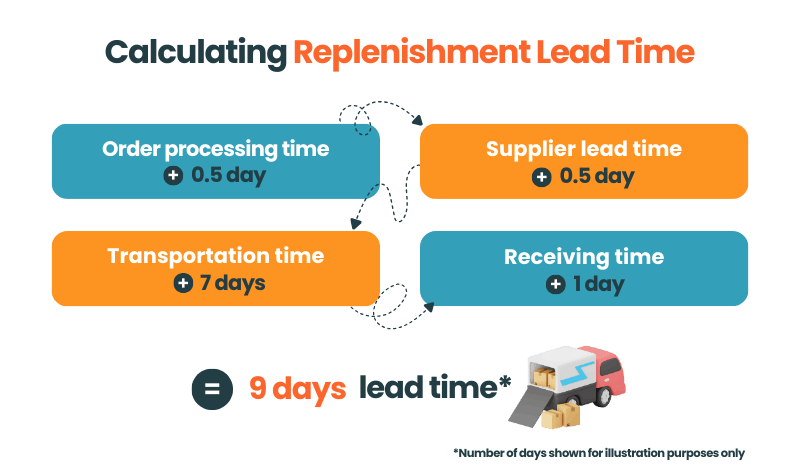
Replenishment lead time is a critical but often underestimated indicator. It represents the time between identifying a need and having products physically available in stock. Poorly estimated lead times significantly increase delays and customer dissatisfaction.
Lead time is calculated by adding order processing time, supplier lead time, transportation time, and receiving time. Knowing this metric allows businesses to commit to accurate delivery dates when operating under a Just-in-Time model.
High-quality data is essential. JIT requires a clear, real-time view of sales, stock levels, and upcoming flows. Without reliable information, replenishment decisions become risky and can destabilize the entire supply chain.
Using a tool that centralizes and updates this data in real time, such as Stockpit, helps secure decision-making and manage inventory flows with confidence.
Cross-team coordination is critical. Sales, purchasing, and logistics teams must share the same information and operate in sync. This is where digital tools play a key role, enabling seamless data sharing and faster decision-making.
Finally, maintaining safety stock for critical items remains essential. Just-in-Time focuses on controlling inventory, not eliminating it altogether.
The Just-in-Time method offers powerful performance levers for B2B SMBs. By aligning inventory with real demand, it reduces cash immobilization, optimizes logistics costs, and improves inventory turnover.
However, success does not come from reducing stock at all costs. JIT is about controlling and managing inventory flows to ensure product availability without jeopardizing operations.
Real-time visibility is key. Stockpit enables SMBs to track inventory in real time, anticipate needs using sales history, and improve coordination between sales, purchasing, and logistics.
With Stockpit, businesses gain a reliable tool to manage demand-driven inventory and make informed decisions. High-performing inventory is available at the right time, in controlled quantities, to sustainably support business growth.
Say goodbye to stockouts! Get your inventory valuation, monitor the inflow and outflow of products and keep track of your inventory.


